When I watched Backrooms, the prevalent thought in my mind was whether director Kane Parsons would be able to properly adapt his web series into the expansive world of the feature length film. He does, and he doesn’t. The concept of Backrooms is fascinating – this liminal space that is both familiar and unfamiliar, and how interactions with the space bring forth unsettling creations. There is ardent curiosity to explore, to understand what this space means, but the horror is recognising that you can never know this space because it was never meant to be occupied. It is beyond comprehension, endlessly transforming and trapping in equal measure.
Parsons understands this space intimately and builds an incredible atmospheric air of suffocation and indifference. The backrooms is apathetic to those that enter its space, yet it knows them, mutating their memories and experiences into a special kind of hell. Maybe this is what hell looks like; mustard-coloured rooms with flickering fluorescent lights, a space we’re doomed to wander and never master.
Chiwetel Ejiofor plays Clark, a furniture salesman deeply unsatisfied with his life. His wife has just left him and he’s working a job he abhors. We first meet Clark in a therapy session with his therapist Mary (Renate Reinsve). Despite endeavouring to work on himself and wanting to change his life’s path, Clark’s deep anger tells a different story. He blames his wife and sees himself as the victim of her choices, not his own. Ejiofor’s performance is what truly anchors the film – his desperation is truly unsettling and we bear witness to his thoughtless actions and how they doom others. Reinsve’s Mary is an intriguing character. She’s the foil to Clark; while he is selfish and destructive, she’s empathetic and wants to help others.
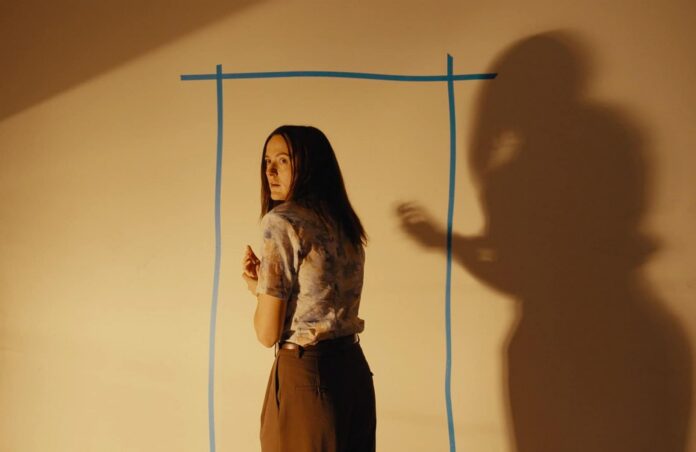
Through Clark and Mary, we observe very different reactions to the backrooms. Clark drowns in his darkness, while Mary breaks free of hers. Her story made me think of my own, and whether we are doomed to live out circular paths despite our efforts not to. However, the narrative space of the film itself is a bit empty. Clark is the only real character in the movie. Mary isn’t as developed despite her presence, which means we get a film that doesn’t have emotional stakes. Horror may bring us into contact with otherworldly spaces or supernatural forces, but the genre is undeniably human. I don’t know if Backrooms ever elevates itself to be something more than its creepy lore.
There’s some truly unsettling moments in the film, due to the incredible production and sound design – that haunting hymn of ‘Feliz Navidad’ in a Christmas tree nightmare room, Mary’s chase sequence leading her to unveil more fantastical rooms. The found footage sequences are excellent and strategically used to elicit horror. This is the film’s strength; it knows how to unnerve and bring us to the edge of our seats. However, as the film wears on and the architecture of the backrooms became more readable, this in turn dilutes the mystery of the space. The terror is now comprehensible. By the time Mark Duplass shows up, the pace has dropped off so much that I found myself not very interested in the outcome anymore.
Parsons, much like Damien McCarthy, are horror auteurs who know what disturbs and brings dread. That’s not a small feat; so many directors of horror films never quite master this. So even though Backrooms isn’t wholly successful, there is potential here that can’t be ignored.
REVIEW SCORE: 3/5