
When I first heard that Carrie was being adapted into a television series, I was cautiously optimistic. The prospect of seeing a modern take on one of Stephen King’s most popular stories was compelling, though the idea of it being retrofitted to deliver the obligatory 8-episode season wasn’t. And while Mike Flanagan is immensely talented, his last adaptation (The Fall of the House of Usher) left me cold; the mixing of Poe’s various works and societal ills felt thematically overstuffed for the show’s simple plot. Essentially, as much as I wanted to believe that Flanagan could deliver on a Carrie “remake”, I felt that it would be undermined by either an overly formulaic approach to storytelling and/or a bloated screenplay. Thankfully, I was only partially right.
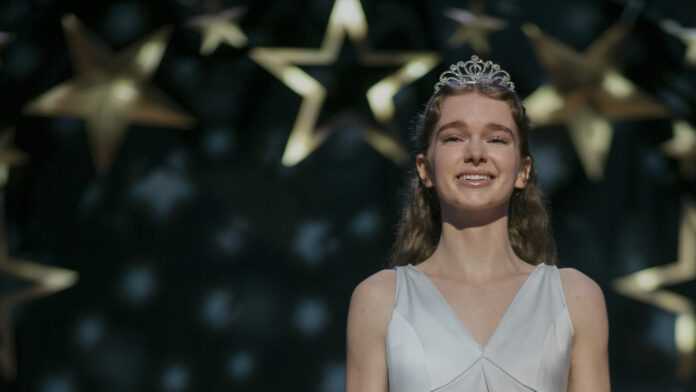
Carrie has a promising start. When the titular character (played by Summer Howell) is forced to attend high school after spending years in seclusion, she’s understandably blindsided by today’s reality. Her handmade attire, missed social cues, and unreasonable notions about modern technology all contribute to Carrie being othered by her fellow students. What makes her initial plight interesting, beyond the foreshadowing of later events, is how it acts as an indictment on those deemed normal; the ridicule Carrie faces for not being knowledgeable of certain aspects of life at the age fifteen is a bad, yet totally expected response.
This contrasting perspective helps in establishing the show’s ominous vibe. What happens to Carrie throughout the show’s eight episodes is inexcusable. That said, her tormentors aren’t exactly monsters, the infamous tampon scene notwithstanding. Rather, they’re shown to be typical, misguided teenagers – certainly not people whose impending doom is easily justified, making their slow march towards a potentially violent end that much more impactful. This is especially true of Carrie’s main bully, Chris Hargensen (Alison Thornton). Usually depicted as someone who enjoys tormenting others, her scornful attitude can be mostly attributed to her troubled home life. While a verbally abusive father, mostly absent mother, and financial struggles don’t excuse poor behavior, they do inform Hargensen’s propensity to make terrible decisions.
By portraying everyone as realistically flawed people and not one-note caricatures, the show cleverly builds tension as it examines the need for bloody vengeance. This makes it hard to champion Carrie’s actions come prom night. That’s not to say that it isn’t cathartic to see her lashing out with her telekinetic powers. Witnessing Carrie’s struggle to make it through the school year is often disheartening. So of course, one can be expected to celebrate when the tables start literally turning in her favor. It’s just that the show leans on the horrific nature of her situation by emphasizing the loss of life and wanton destruction over a sense of poetic justice.
Like previous iterations, Carrie initially compels by centering on the melodrama between its characters. This version, however, benefits from its cumulative runtime; the show has the room to properly explore the ramifications of a given situation while highlighting the nuanced viewpoints of those involved. Ideally, if this aspect was kept up throughout the show’s entire eight-episode run, it would’ve been the best version of this classic story. Unfortunately, the introduction of a weak substory involving other powered individuals undermines that claim.
Having more than one gifted teen isn’t an issue. Given how they are alluded to in King’s original novel, it makes sense to include them here. What’s problematic is how these underdeveloped characters are able to influence key moments. Their contributions are only meaningful when considering the world beyond Carrie’s little town. Which could’ve proved interesting if their involvement wasn’t clearly set up as a way to justify future episodes; I won’t spoil the show’s ending, only to say that what should’ve been the culmination of several emotionally charged events is ruined by the prospect of a second season.
Most everything else about Carrie is great. The cinematography, special effects, soundtrack – it all complements the story Flannagan is trying to tell. The same can be said of the show’s talented cast. Howell, for instance, excels as the naïve, yet hopeful Carrie. Though her passionate line delivery and cheerful demeanor is perfect for the role, it’s Howell’s commanding presence that truly captivates; she exudes an inner strength that makes Carrie’s transition from a perpetual victim to a force to be reckoned with that much more believable.
Thornton’s portrayal of Hargensen is also commendable. Her ability to visually express the emotional toil of a hurting teen while delivering sharp, callous lines help in creating a realistic bully. Hargensen is never likeable. That said, thanks to Thornton’s acting, it’s easy to root for her when she’s on the verge of changing her self-sabotaging ways. Samantha Sloyan’s depiction of Margaret White, Carrie’s overly religious and often abusive mother, is similar. Known for playing some of the most insufferable people imaginable (her portrayal of Midnight Mass’ Bev Keane being a prime example), Sloyan expertly channels the manipulative aspects of the character. Yet, it’s her pained expressions and subtle shifts in posture during emotional scenes played opposite of Howell that allude to something more; White actually cares about her daughter, even when her actions say otherwise.
Mike Flanagan has done the impossible in turning Carrie into decent television series. It has its issues, namely a weak subplot and a disappointing season finale. But its foreboding atmosphere, engaging melodrama, and wonderful acting – anchored by an amazing performance from Summer Howell – all make Carrie worth watching.
Review screener provided.
REVIEW SCORE: 3/5

